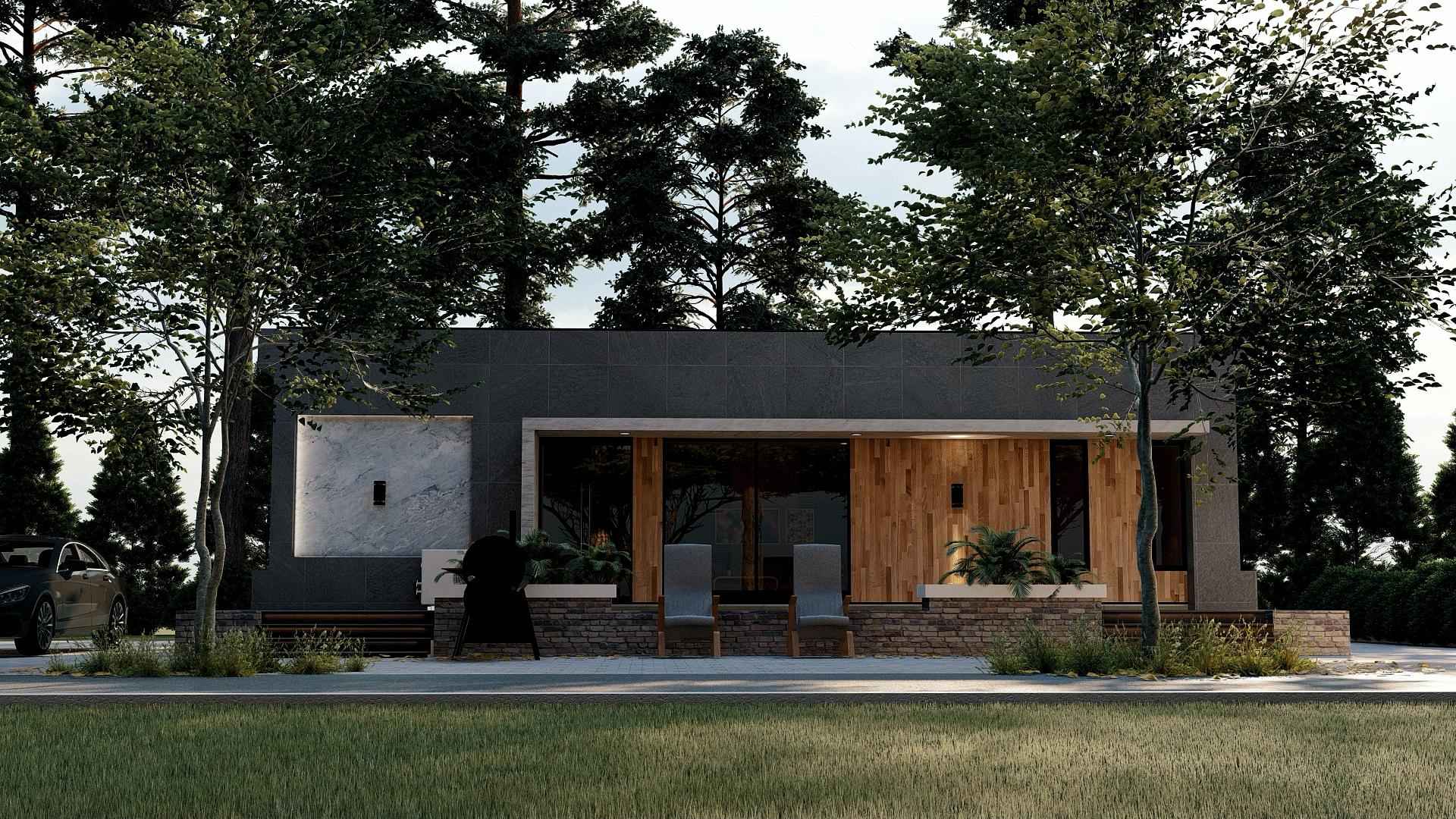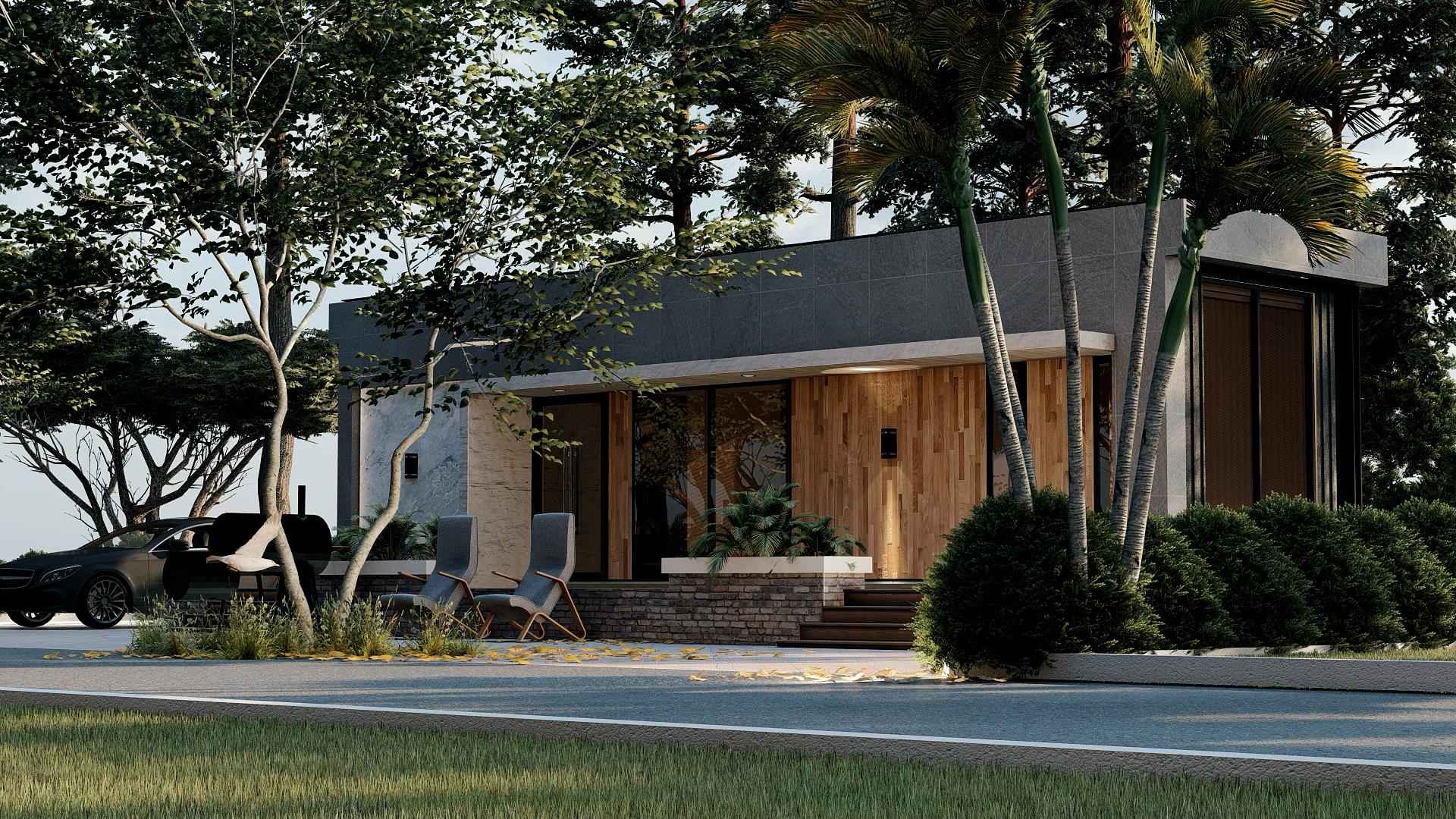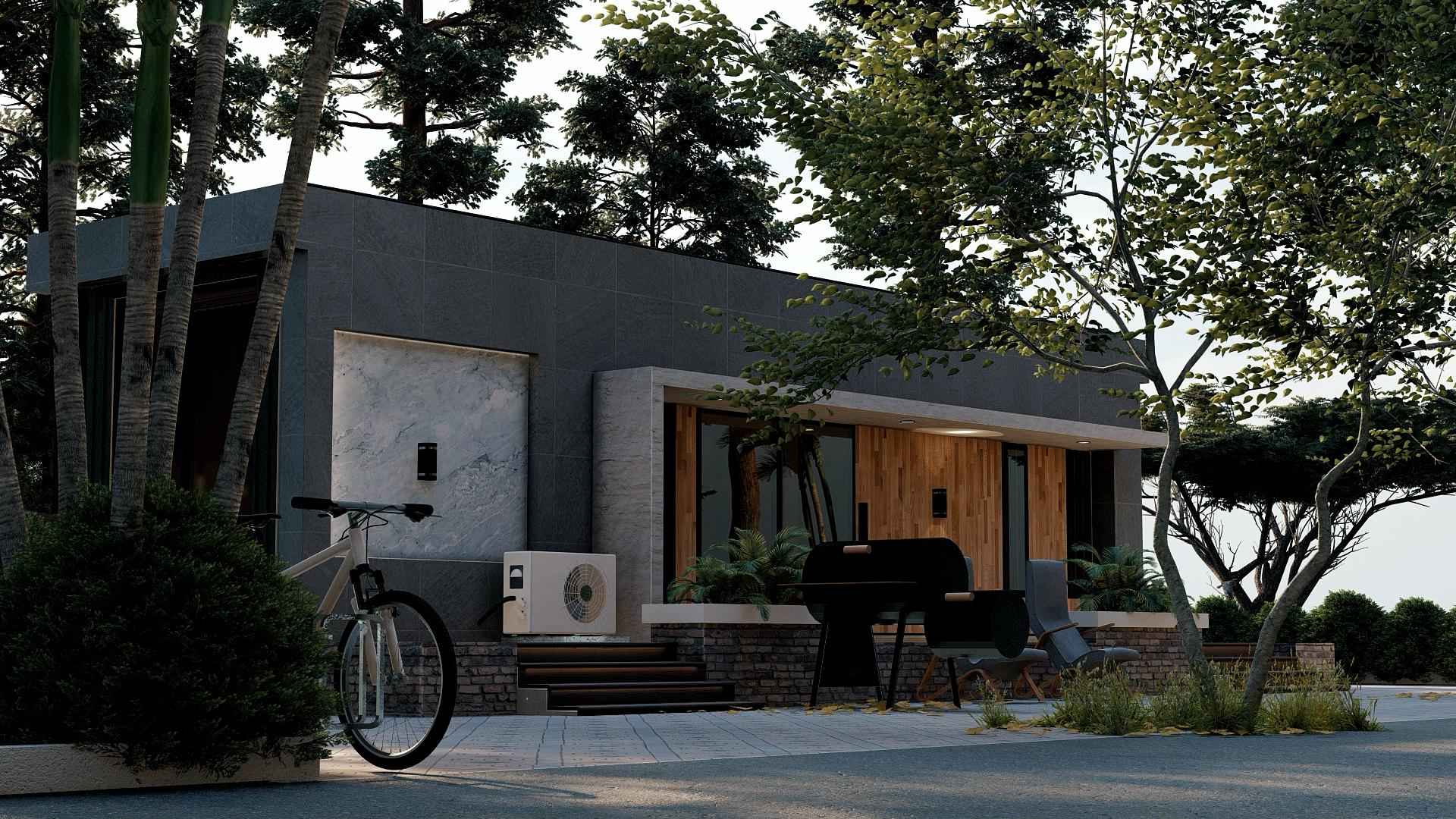
the nest-container house
PROJECT SUMMARY
LOCATION: ONDO STATE, NIGERIA
LAND SIZE: A Plot
DESIGN YEAR: 2022
CLIENT: MASEBINU BENJAMIN
ARCHITECTURAL STYLE: CUBISM
BACKGROUND INFORMATION
In May 2022, Mr. Ben initiated plans to develop a nature focused resort style Airbnb project. The concept was centered on creating accommodation that blends seamlessly with its natural surroundings while remaining cost effective, durable, and visually appealing.
As part of a broader feasibility and visibility study, Mr. Ben commissioned CHii Consults to develop a prototype container house design. The objective was to evaluate construction costs, spatial efficiency, and overall practicality of container based housing for hospitality use.
Although multiple container configurations were considered, a forty foot shipping container was selected as the primary specimen for this study. This container size offered an ideal balance between space, flexibility, and structural efficiency, making it suitable for scalable resort development.
DESIGN CONCEPT AND SPATIAL LAYOUT
The proposed structure is a two bedroom container house designed with a contemporary architectural feel. The layout follows an open plan concept to maximize the limited internal space while maintaining comfort and functionality.
The living room and kitchen share a unified open space, enhancing visual openness and natural light penetration. The two bedrooms are positioned at opposite ends of the container to provide privacy, with a centrally located fully functional bathroom serving both rooms.
Simplicity was a key design driver. The spatial planning and material choices were intentionally kept minimal to reduce construction and finishing costs without compromising usability or aesthetics.
STRUCTURAL AND THERMAL DESIGN STRATEGY
An internal wooden framing system was introduced to accommodate proper interior wall construction. This framing allows for the installation of insulation materials and gypsum board wall finishes.
This design decision was critical due to the tropical climate of Nigeria. Direct contact between interior spaces and the metallic shell of a shipping container can result in excessive heat buildup, making the interior uncomfortable for occupants. To address this, the container interior was fully padded with insulation and gypsum board, significantly improving thermal comfort and habitability.
STRUCTURAL REINFORCEMENT AND ROOF
Shipping containers are structurally stable when intact, as they are designed to self reinforce as a complete unit. However, once openings are introduced for doors, windows, and internal modifications, their structural integrity can be compromised.
To mitigate this risk, a reinforced framing system was incorporated to stabilize the modified container structure. Additionally, three freestanding metal I section steel columns were introduced to support the roof independently. This approach prevents the roof load from resting directly on the container shell, thereby reducing structural stress and enhancing long term durability.
FACADE TREATMENT AND EXTERNAL AESTHETICS
The exterior facade and side elevations of the building were finished with aluminum composite panels. These panels were selected for their durability, lightweight nature, and modern appearance.
The same aluminum composite panels, combined with a metal framing system, were extended to form overhangs over the patios and window areas. These architectural elements provide solar shading, weather protection, and visual depth, contributing significantly to the overall aesthetic appeal of the building.
DESIGN SUMMARY
This container house proposal demonstrates a practical and climate responsive approach to container based residential design in Nigeria. It balances cost efficiency, structural safety, thermal comfort, and modern architectural expression, making it a viable prototype for resort style Airbnb developments in natural settings.